Why Do the Huldah Gates Appear Different in Ancient Replicas and Modern Photos?

Why Do the Huldah Gates Appear Different in Ancient Replicas and Modern Photos?... hero image

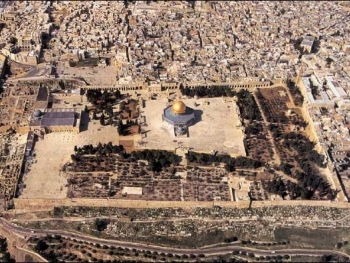
The Huldah Gates, located on the southern wall of the Temple Mount in Jerusalem, are a significant archaeological and historical feature. These gates served as entrances and exits for worshippers ascending to the Temple during the Second Temple period. A curious observation arises when comparing modern photos of the gates with ancient replicas: the number of arches seems to differ. While some ancient models show two arches for both the entrance and exit, modern photos of the southern wall reveal three arches at the location of the entrance.

So, what accounts for this discrepancy? Are we dealing with an error in the replicas, changes made over time, or a deeper historical mystery? Let’s explore the history and significance of the Huldah Gates to uncover the answer.

Understanding the Huldah Gates

The Huldah Gates, named after the prophetess Huldah (2 Kings 22:14), were part of the southern approach to the Temple Mount during the Second Temple period. These gates were used by worshippers to ascend to the Temple via underground passageways.

  • Double Gate: This gate served as the exit for worshippers leaving the Temple. It consists of two arches.
  • Triple Gate: This gate served as the entrance, allowing worshippers to ascend to the Temple Mount. It consists of three arches.

Why Do Replicas Show Two Arches for Both Gates?

The discrepancy likely stems from the historical models and interpretations used in creating the replicas. Let’s examine possible reasons:

  1. Incomplete Archaeological Knowledge
    Early reconstructions of Jerusalem and the Temple Mount relied on limited archaeological evidence. Some ancient models, like those from the 19th and early 20th centuries, were created before comprehensive excavations revealed the true layout of the gates. This could explain why certain models inaccurately depicted both gates with two arches.
  2. Wear and Modification Over Time
    The modern southern wall has undergone significant changes since the Second Temple period. After the Temple's destruction in 70 CE, the area was repurposed, and architectural features like arches could have been altered or repurposed. In some cases, replicas might represent an earlier or alternative phase of construction that differed from what we see today.
  3. Simplified Depictions
    Some replicas or models may have intentionally simplified the gates for artistic or practical reasons. For instance, focusing on the functional concept of "double" and "triple" gates without strict adherence to the number of visible arches.

Historical Evidence of the Gates

  1. Second Temple Period Descriptions
    Historical texts, such as those by Josephus, describe the southern gates leading to the Temple Mount. He refers to the gates but does not provide detailed accounts of their architectural features. The lack of precise written records may have contributed to inconsistencies in later depictions.
  2. Archaeological Discoveries
    Modern excavations have confirmed that the Double Gate indeed had two arches and the Triple Gate had three arches during the Second Temple period. These gates were connected to passageways leading to the Temple Mount.
    • The Triple Gate's arches are still visible today, although they are blocked off.
    • The Double Gate's southern entrance is partially obscured by later constructions, but its original two-arched structure remains evident.
  3. Medieval and Ottoman Modifications
    During the Byzantine, Islamic, and Ottoman periods, the Temple Mount underwent significant changes. Some features of the southern wall, including the Huldah Gates, were incorporated into new structures, potentially altering their appearance. These modifications might explain why the arches seen today differ slightly from those depicted in some replicas.

Significance of the Gates in Jewish Worship

The Huldah Gates were not merely functional structures; they held symbolic and spiritual significance:

  • The gates provided a sacred transition for worshippers entering the Temple Mount.
  • The separation of entrance (Triple Gate) and exit (Double Gate) may have helped manage the flow of worshippers and preserved a sense of order and sanctity.
  • The gates' placement on the southern wall aligned with the pilgrimage route taken by many worshippers traveling from the City of David and surrounding areas.

What Are We Missing?

It seems unlikely that a well-researched replica would make such an obvious error as omitting one of the Triple Gate’s arches. Instead, the discrepancy may arise from the following:

  1. Phase of Construction Represented
    The gates may have undergone multiple phases of construction during the Second Temple period. Some replicas could represent an earlier phase when the Triple Gate had a different configuration or fewer visible arches.
  2. Cultural or Artistic Interpretation
    The creators of replicas may have relied on incomplete knowledge or chosen to simplify details for clarity, focusing on the symbolic "double" and "triple" designations rather than precise architectural details.
  3. Perspective in Photographs
    Modern photos sometimes emphasize features of the southern wall that were not as prominent in ancient times due to later modifications or changes in the surrounding landscape.

The Huldah Gates remain a fascinating testament to the ingenuity and faith of the Second Temple period. While ancient replicas and modern photos may differ in their portrayal of the gates, this discrepancy highlights the evolving understanding of Jerusalem's history and archaeology.

Far from being an error, the differences remind us that our knowledge of ancient sites is continually growing. Every model, photograph, and excavation adds another piece to the puzzle, helping us appreciate the rich history of the Temple Mount and its surroundings.

If you have further questions about the Huldah Gates or other archaeological mysteries, feel free to ask in the comments or explore our other articles on biblical history and archaeology!


Jerusalem Temple In First Century Jerusalem Temple Archaeology Biblical Archaeology Jerusalem Bible Jerusalem Bible and archaeology Huldah Gates Temple Mount history Temple Mount Jerusalem archaeology Southern wall Temple Mount Biblical architecture Second Temple period Second Temple Archaeological replicas Ancient Jerusalem gates City of David Biblical archaeological discoveries

Related Articles:

What were the major achievements of the ancient Greeks in art and architecture?

The ancient Greeks made remarkable achievements in art and architecture, leaving a lasting impact on Western civilization. Some of their major accomplishments include: Sculpture: Greek sculpture reached unparalleled heights, with an emphasis on ideal...

Who were the Main Historical Sources for the Life of Nero? post related image

Who were the Main Historical Sources for the Life of Nero?

The main historical sources for the life of Nero were Tacitus Tacitus Publius Cornelius (55-120 A.D. approx.), Suetonius Svetonius Tranquillus (70-140 A.D. approx.), Cassius Dio Dion Cassius Cocceianus (155-235 A.D. approx.), Jewish and Christian Tra...

Where was Mesopotamia?

Mesopotamia, mentioned in the Bible, refers to an ancient region located in present-day Iraq and parts of Syria and Turkey. The term "Mesopotamia" means "land between rivers" in Greek, as the region is situated between the Tigris and Euphrates rivers...

How did ancient Chinese society and culture differ from Western civilizations?

Ancient Chinese society and culture exhibited several notable differences from Western civilizations. Here are some key distinctions: Philosophical Traditions: While Western civilizations developed philosophical systems such as Greek philosophy and l...

How did the ancient Egyptians build the pyramids?

The pyramids of Egypt stand as iconic symbols of ancient Egyptian civilization, representing remarkable architectural and engineering achievements. Constructed as tombs for pharaohs, these colossal structures continue to captivate the world with thei...

What was a Watchtower?

In the Bible, a watchtower, also known as a lookout or watchman's tower, was a raised structure used for surveillance and observation. It served as a strategic vantage point from which watchmen could keep watch over the surrounding area, looking out ...

Do any Archaeological Discoveries Mention Israel? post related image

Do any Archaeological Discoveries Mention Israel?

The Moabite Stone was discovered in 1868 about 20 miles east of the Dead Sea at Moab. It was a black and blue basalt stone dating back to around 830 BC, discovered by a German Missionary named F.A. Klein. It contains an inscription that reads: “I M...

Why was Pompey Referred to as “The Great”? post related image

Why was Pompey Referred to as “The Great”?

Pompey was a military genius and his soldiers recognized this and referred to him as “Magnus” which means the great, thus the name Gnaeus Pompeius Magnus. Source: Pompey the Great...

Who Were the Main Powers in Italy Before the Roman Empire?

The main powers in ancient Rome were Carthage, Greece, and Etrura. The Italian Peninsula is located right in the heart of the Mediterranean Sea. Rome is located right in the heart of Italy on a large plain known as Latium. Source: Latium and Geo...

What were the Classes of Citizenship in Ancient Rome? post related image

What were the Classes of Citizenship in Ancient Rome?

The classes of citizenship (civitus) and legal status in ancient Rome varied over the centuries. When Rome conquered a city the defeated people would fall into one of four classes. Citizens, Municipia, Latin Allies, and Italian Allies. Other areas m...

Was the Adriatic Sea a Place of Sudden Storms?

The Bible does not specifically mention the Adriatic Sea as a place of sudden storms. However, the Bible does contain accounts of storms and tempests occurring at sea in various locations, emphasizing the unpredictable and perilous nature of such eve...

What is the Passover Papyrus? post related image

What is the Passover Papyrus?

The Passover Papyrus is a letter from among the elephantine papyri that dates back to the time of Darius II, in 419 BC. In 1907 archaeologists discovered in Aswan papyrus fragments of a letter that bears the royal authority of the Persian Empire (not...

What were the religious beliefs and practices of the ancient Egyptians?

The religious beliefs and practices of the ancient Egyptians were complex and deeply intertwined with their daily lives. Here are some key aspects: Polytheistic Belief: Ancient Egyptians believed in a pantheon of gods and goddesses who governed vario...

Did Augustus Build a Temple at the Site of Caesarea Philippi? post related image

Did Augustus Build a Temple at the Site of Caesarea Philippi?

Yes there are remains of a Temple of Augustus at the site of ancient Paneas or Caesarea Philippi. This illustration depicts a Temple of Augustus. The temple at Caesarea Philippi would have been built in a similar style. Augustus was fascinated with t...

Did Tiberius Caesar Know Jesus was Being Crucified? post related image

Did Tiberius Caesar Know Jesus was Being Crucified?

It is not known whether Tiberius had heard of Jesus, or knew about the crucifixion of Jesus. Word about Jesus and his miracles spread quickly throughout the Roman Empire, even to the Imperial Palace on Palatine Hill, but Tiberius had retired to his p...

Why Did the Goddess Diana have so many Breasts? post related image

Why Did the Goddess Diana have so many Breasts?

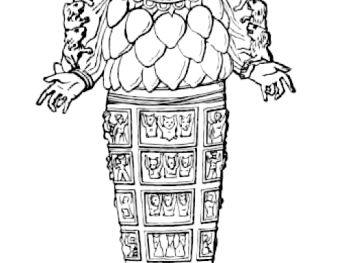
In the Temple of Artemis also referred to as Diana the statue of the Roman goddess was depicted as covered entirely with breasts. This is because Diana was the goddess of fertility, and the multi-breasts were denoting fertility, nourishing the living...

What is significant about the Dead Sea?

The Dead Sea holds several significant aspects in biblical and historical contexts. Here are some key points: Geological and Natural Features: The Dead Sea is a saltwater lake located at the lowest elevation on Earth. Its high salt concentration make...

What is the Meaning of Jerusalem? post related image

What is the Meaning of Jerusalem?

The etymology of the name Jerusalem is not certain; it is apparently of Semitic origin. An Egyptian notice from the third quarter of the nineteenth century B.C. mentions Urusalimum. The Assyrians called it Ursalimmu. Modern scholars take these names ...


Read The Bible

About

Welcome to Free Bible: Unearthing the Past, Illuminating the Present! Step into a world where ancient history and biblical narratives intertwine, inviting you to explore the rich tapestry of human civilization.

Discover the captivating stories of forgotten empires, delve into the customs and cultures of our ancestors, and witness the remarkable findings unearthed by dedicated archaeologists.

Immerse yourself in a treasure trove of knowledge, where the past comes alive and illuminates our understanding of the present.

Join us on this extraordinary journey through time, where curiosity is rewarded and ancient mysteries await your exploration.

Recent posts